
Dogs hide pain well. It's an evolutionary trait from their wolf ancestors — showing weakness in a social hierarchy carries risk. Which means by the time most owners recognize that their dog is uncomfortable, the pain has typically been present for some time. Effective arthritis pain management in dogs requires recognizing this masked presentation and responding with a multi-modal approach that addresses pain through several mechanisms simultaneously.
I want to be clear upfront: I'm a nutritionist, not a veterinarian. This guide covers the full landscape of pain management options, including pharmaceutical interventions that require veterinary partnership. Nutrition and supplements are part of the picture, not the whole picture. Dogs with significant arthritis deserve a complete approach.
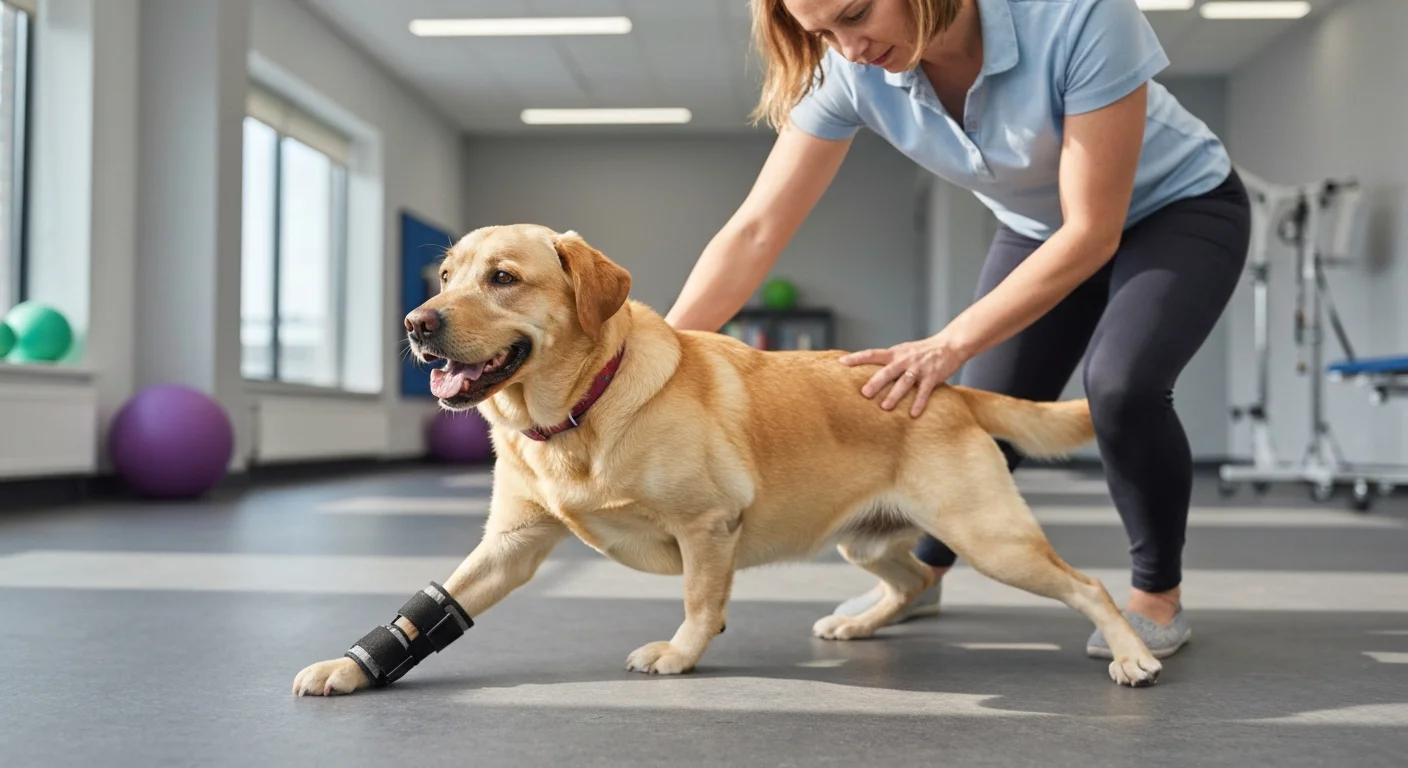
Recognizing Pain in Arthritic Dogs
Before managing pain, you have to recognize it. Canine arthritis pain is frequently subtle, especially in stoic breeds like German Shepherds, Huskies, and working-line Border Collies. The early joint problems guide covers behavioral indicators in detail, but here are the key signs specific to pain (as opposed to purely mechanical joint dysfunction):
- Altered sleep patterns — more frequent position changes, reluctance to lie down, early rising
- Personality changes — increased irritability, decreased social interaction, guarding behavior when touched
- Reduced appetite, particularly if pain is acute or worsening
- Panting at rest or in cool conditions (a pain signal often missed)
- Licking or attention to specific joint areas
- Facial expression changes — squinted eyes, flattened ears, tense jaw
Veterinary assessment using validated pain scales (the Helsinki Chronic Pain Index is commonly used in dogs) provides objective baseline measurements that let you track whether management is working.
The Multi-Modal Pain Management Framework
Effective arthritis pain management uses multiple approaches simultaneously, targeting different components of the pain pathway. This matters because combining lower doses of several interventions typically produces better pain control with fewer side effects than maximizing any single approach.
Tier 1: Pharmaceutical Interventions (Veterinary Partnership Required)
I include pharmaceuticals first because for dogs with significant pain, they provide the fastest, most reliable relief — and they create a baseline of comfort that makes all other interventions more effective. A dog in significant pain can't benefit well from exercise therapy or respond normally to diet changes.
NSAIDs (Non-Steroidal Anti-Inflammatory Drugs): Drugs like meloxicam, carprofen, and grapiprant are the foundation of pharmaceutical arthritis management. They reduce prostaglandin-mediated inflammation and significantly improve quality of life in most arthritic dogs. Regular bloodwork monitoring (kidney and liver function) is required for long-term use. Never use human NSAIDs — ibuprofen and naproxen are highly toxic to dogs.
Gabapentin: A neuropathic pain modifier that works by a different mechanism than NSAIDs, making it an excellent combination partner. Particularly useful for dogs with chronic pain who have developed central sensitization — where the nervous system has become hyperresponsive to pain signals.
Injectable therapies: Adequan (polysulfated glycosaminoglycan) injected subcutaneously or intramuscularly provides joint fluid support and has cartilage-protective properties. A newer class of monoclonal antibody treatments targeting nerve growth factor (bedinvetmab, sold as Librela) provides monthly pain control through a mechanism entirely different from anti-inflammatories.
Tier 2: Nutritional Pain Management
Nutrition addresses pain through the inflammatory pathway rather than directly blocking pain signals. This is slower (weeks rather than hours) but sustainable long-term without organ monitoring concerns.
Therapeutic omega-3 supplementation: At appropriate doses, EPA from marine sources reduces the production of inflammatory prostaglandins and leukotrienes that sensitize pain receptors. This is mechanistically similar to what NSAIDs do, but through competitive inhibition rather than enzyme blockade. The complete protocol is in the omega-3 dosing guide. For a dog on NSAIDs, adding omega-3s at therapeutic doses may allow dose reduction over time — always discuss with your veterinarian before changing pharmaceutical doses.
Dietary anti-inflammatory foundation: A diet high in refined carbohydrates and low in omega-3s maintains a pro-inflammatory systemic state that works against every other pain management effort. Transitioning to a whole-food or minimally processed diet with high-quality protein sources is worth the effort. The anti-inflammatory diet guide provides specific dietary strategies for arthritic dogs.
Tier 3: Physical Therapies
Physical interventions work through entirely different mechanisms than either pharmaceuticals or nutrition, making them genuinely additive rather than redundant.
Controlled exercise: Counter-intuitive but supported by evidence — appropriate exercise reduces arthritis pain by maintaining muscle mass, improving joint fluid circulation, and activating endogenous pain-modulating systems. The key word is "controlled." Overexertion causes flares; appropriate movement manages them. The exercise modifications guide details how to calibrate activity for each disease stage.
Thermotherapy: Moist heat applied to arthritic joints before exercise or activity reduces stiffness and improves comfort. Cold therapy after exercise or activity reduces acute inflammation. The protocol isn't complicated, but application timing matters significantly. The cold and heat therapy guide covers timing, temperatures, and technique in detail.
Laser therapy (PBMT): Photobiomodulation therapy using class IV or class IIIb lasers has become one of the most evidence-supported physical pain management options in veterinary medicine. Studies show reductions in inflammatory mediators and improvements in pain scores. A typical protocol involves 6 to 8 initial sessions followed by maintenance every 2 to 4 weeks. Cost and access vary significantly.
Acupuncture: I'm more skeptical of acupuncture than some colleagues, but the evidence for dry needle acupuncture at trigger points (myofascial release) for musculoskeletal pain is more convincing than classic meridian acupuncture. For dogs with significant muscle tension secondary to joint pain, this can be useful.
Optimizing the Home Environment
Environmental pain reduction is often the most overlooked component of arthritis management. A dog that must navigate slippery hardwood floors, jump onto furniture, or negotiate steep stairs multiple times daily experiences unnecessary pain that accumulates over time.
- Orthopedic memory foam beds redistribute weight evenly, reducing pressure point pain during the extended rest periods arthritic dogs need
- Non-slip rugs or mats on hard flooring prevent the muscle strain and pain of slipping
- Ramps to furniture and vehicles eliminate repetitive landing impact
- Raised food and water bowls reduce neck and shoulder strain for dogs with front limb joint issues
These modifications cost very little relative to the cumulative pain reduction they provide. I consider them non-negotiable for dogs with established joint disease.

Monitoring Pain Management Effectiveness
Pain management without objective monitoring is guesswork. Keep a simple daily log tracking:
- Morning stiffness duration (how long until the dog moves normally after rest)
- Activity level relative to the dog's baseline (using your subjective 1-10 scale)
- Willingness to engage in activities they normally enjoy
- Any limping or gait abnormalities
Review this log at veterinary appointments. If pain management isn't producing steady improvement or at least stability over 4 to 6 weeks, the protocol needs adjustment. Dogs with inadequately managed pain experience accelerated disease progression — chronic pain itself worsens the inflammatory state that drives cartilage destruction.