
The dog joint supplement industry is worth billions of dollars annually and is almost entirely unregulated. In the United States, animal supplements are categorized as animal feeds, not drugs, meaning they aren't required to demonstrate efficacy or even accurate labeling before reaching store shelves. Third-party testing has repeatedly found products containing less active ingredient than claimed, contaminated products, and products with ingredient forms that have poor or no research support.
After 12 years formulating these products professionally, I'm going to give you the framework I actually use to evaluate joint supplements — based on manufacturing standards, ingredient quality, dosing transparency, and the research record behind specific forms of each ingredient.
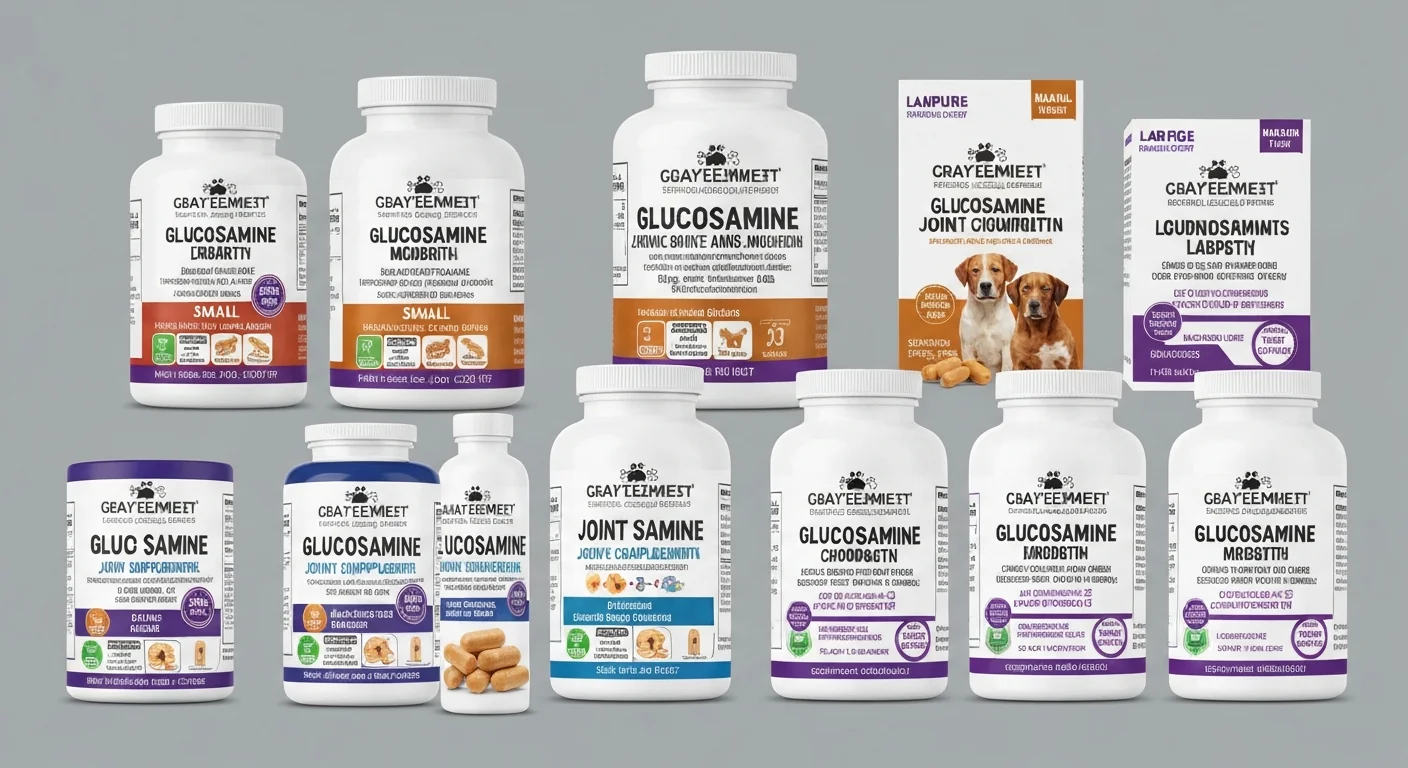
Step 1: Verify Dosing Transparency
The first question to ask about any joint supplement is: exactly how many milligrams of each active ingredient does one serving contain?
If the answer is "it's in a proprietary blend," walk away. Proprietary blends list the total weight of all blended ingredients combined, but not the amount of each individual ingredient. Manufacturers use this to hide underdosing while allowing them to claim the presence of premium ingredients in token amounts.
A legitimate joint supplement will state, for example: "Glucosamine HCl 500mg, Chondroitin Sulfate 400mg, MSM 200mg" per tablet or chew. If you can't find this information clearly on the label or the manufacturer's website, the product fails the first transparency test.
Step 2: Verify Ingredient Forms
Not all glucosamine is the same. Not all chondroitin is the same. The specific molecular form affects bioavailability, efficacy, and cost — which is why manufacturers sometimes choose the cheaper, less effective form.
Glucosamine
Two forms are used in joint supplements: glucosamine hydrochloride (HCl) and glucosamine sulfate. Research directly comparing them has consistently shown glucosamine HCl to be superior in absorption and bioavailability in dogs. The majority of positive canine joint studies have used glucosamine HCl specifically. If a product lists only "glucosamine" without specifying the form, contact the manufacturer. If they can't tell you the form, that's another red flag.
Shellfish-derived glucosamine is the most common source and perfectly adequate. If your dog has shellfish allergies, corn-derived glucosamine is available from some manufacturers.
Chondroitin
Chondroitin source matters more than most owners realize. Bovine trachea-derived chondroitin sulfate has the best bioavailability data. Shark-derived chondroitin is common and less consistent in quality. "Porcine chondroitin" is increasingly available and has reasonable evidence. Products listing source origin are more transparent than those that don't.
Molecular weight also affects absorption. High molecular weight chondroitin has poor intestinal absorption; low molecular weight forms show better uptake. Few manufacturers specify molecular weight, but products from companies with pharmaceutical manufacturing standards tend to address this.
MSM
MSM (methylsulfonylmethane) has fewer quality variants than glucosamine or chondroitin. OptiMSM is a specific branded form that has been used in the clinical research that does exist for MSM. Products specifying OptiMSM are using a tested form; unspecified MSM may be equivalent but lacks the research documentation. The supplement science guide covers the evidence base for MSM in detail.
Step 3: Evaluate the Dose Against Therapeutic Thresholds
Even a perfectly transparent label with excellent ingredient forms is useless if the dose is insufficient. The established effective doses for canine joint supplements are:
| Ingredient | Effective Daily Dose | Common Underdose | Notes |
|---|---|---|---|
| Glucosamine HCl | ~20mg/kg/day | 300–500mg (for all sizes) | 50lb dog needs ~450–500mg; 100lb dog needs 900–1000mg |
| Chondroitin Sulfate | 15–20mg/kg/day | 100–200mg (for all sizes) | Often more underdosed than glucosamine due to higher cost |
| MSM | 10–50mg/kg/day | 100–150mg | Wide therapeutic range; higher doses have more limited evidence |
| EPA+DHA | 75–100mg/kg/day | 50–100mg EPA+DHA total | Most "joint supplements" with omega-3s are dramatically underdosed on this component |
These numbers mean that a single-tablet-for-all-sizes supplement cannot provide adequate doses for a large dog. Weight-dosed products that adjust serving size for body weight are more reliable for larger dogs than fixed-dose products. The complete dosing guide is in my glucosamine, chondroitin, and MSM dosages article.
Step 4: Look for Quality Assurance Documentation
Third-party testing is the most meaningful quality signal available for supplements. Look for:
- NSF International certification — verifies the product contains what the label claims and isn't contaminated with prohibited substances
- NASC (National Animal Supplement Council) Quality Seal — animal-specific program requiring adverse event reporting and audit-based quality manufacturing
- USP (United States Pharmacopeia) verification — pharmaceutical-grade testing standard, less common in animal supplements but highest level of assurance
- COA (Certificate of Analysis) availability — some manufacturers provide batch-specific COAs on request or downloadable from their website
A manufacturer unwilling to provide any third-party quality documentation is asking you to take their word that the product contains what they claim. Given the documented history of supplement mislabeling, this is an unreasonable request for a product you're giving your dog daily.
Step 5: Assess the Omega-3 Component Separately
Many combination joint supplements include omega-3 fatty acids. In my experience, this is almost always a marketing addition at doses that provide no meaningful anti-inflammatory benefit.
A combination joint chew that includes "fish oil" as an ingredient typically provides 50 to 150mg of omega-3s. Therapeutic anti-inflammatory doses for a 25kg dog require 1,875 to 2,500mg of EPA + DHA. The combination product provides, at best, 8% of what's needed for anti-inflammatory benefit.
Rather than relying on a combination product for omega-3s, purchase a separate, dedicated omega-3 product where you can verify exact EPA and DHA content and dose it appropriately. The omega-3 guide covers how to evaluate and select fish oil and alternative products specifically.

Step 6: Consider Form Factor and Palatability
The best supplement in the world provides no benefit if your dog refuses to eat it. Form factor options include:
- Flavored chews/treats: Highest palatability, lowest bioavailability control (some fillers affect absorption)
- Powder (sprinkle on food): Good palatability for most dogs, easy dose adjustment
- Capsules: Can be opened and added to food, most flexibility with ingredient sources, lowest palatability without food masking
- Liquid: Easy to mix into food, can degrade more quickly if not refrigerated properly
I typically recommend powder or capsule forms for therapeutic supplementation because they allow more flexible dosing and tend to come from manufacturers with a pharmaceutical rather than pet treat orientation — which often correlates with better ingredient quality.
Building Your Supplement Stack
Rather than a single combination product, I recommend purchasing separate, high-quality sources for each component:
- Glucosamine HCl — standalone human supplement (identical molecule to dog supplements, significantly cheaper)
- Chondroitin sulfate — bovine-derived, standalone
- Omega-3s — separate fish oil or algae oil product with verified EPA/DHA content
- Optional: UC-II collagen (InterHealth brand specifically)
- Optional: Cold-processed green-lipped mussel powder
This approach costs more in time but typically less in money than combination products, and provides far better control over what you're actually giving your dog and at what doses. The complete protocol guide shows how to integrate these into a coordinated daily routine.