
Two dogs can eat the same diet, take the same supplement and live in the same house, yet need completely different joint plans — because their skeletons are built on different blueprints. Morphology is the blueprint: leg length versus spine length, chest depth, head weight, angulation, growth rate. Once you learn to read it, a dog's silhouette tells you where arthritis will show up a decade before the limp does.
The contrast is easiest to see at the extremes. Put a Czechoslovakian Wolfdog — long-legged, athletic, built for endurance trotting — next to a Maltese, and you are looking at two different mechanical problems wearing fur. A French-language guide like the breed-by-breed morphology reference at chien-race.com is useful precisely because it lays out allure, robe, taille, regard and temperament side by side across fifty breeds — the raw material for the reading method below.
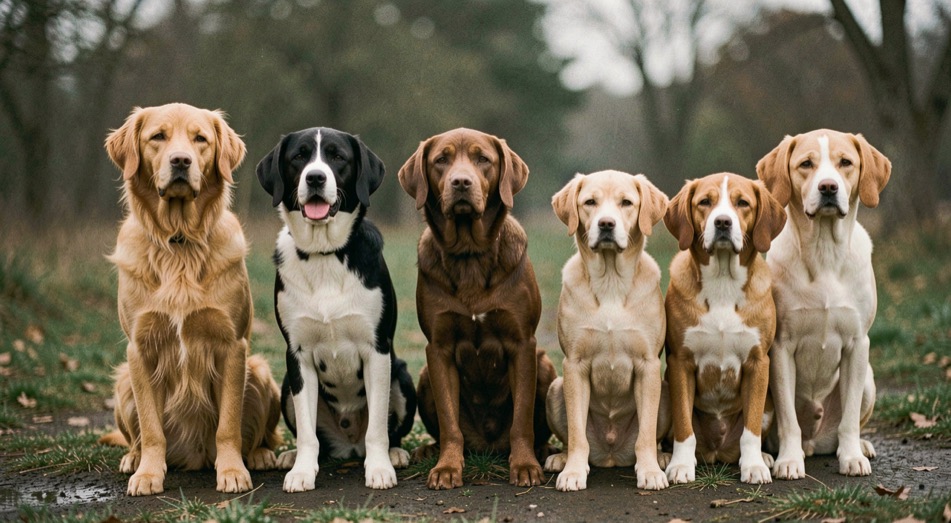
The Five Morphological Variables That Drive Joint Load
1. Absolute size and growth speed
Cartilage biology does not scale with ambition. A Great Dane puppy can gain a pound a day during peak growth, and the joint surfaces simply cannot remodel fast enough to keep that structure aligned. This is why giant breeds live or die by their growth diet — excess calcium and excess calories during growth are not just fat, they are malformed joints.
Small breeds have the opposite problem: their growth is fast and early, and their joints are tiny enough that a minor conformational fault — a shallow patellar groove, a slightly rotated tibia — has proportionally large effects. Patellar luxation is overwhelmingly a small-breed disease for exactly this reason.
2. Limb length versus spine length
Chondrodysplastic breeds — Dachshunds, Bassets, Corgis — carry a normal-sized spine on shortened limbs. The load does not disappear; it relocates into the intervertebral discs and the shoulders. Roughly one Dachshund in four will experience a clinically significant disc event in its lifetime. No supplement changes that anatomy, which is why ramp training and weight control matter more for these dogs than any capsule.
3. Angulation and topline
Rear angulation decides how propulsion reaches the hip. The exaggerated slope of a show-line German Shepherd transfers load differently than the level back of a working line — and the dysplasia statistics track that difference. A straight, upright rear (think many Maltese and toy breeds) loads the stifle differently again, increasing cruciate strain on a joint with almost no muscle mass to spare.
4. Chest depth and weight distribution
Deep-chested breeds carry their mass forward — up to 60 to 65 percent of body weight on the forelimbs at a standstill, more on landing. That is why elbow dysplasia and shoulder OCD cluster in retrievers, Rottweilers and the big molossers: the front of the dog does most of the braking, every step, for years.
5. Coat, tail and the tells you can actually see
Morphology is also your early-warning surface. A roached back, a tucked pelvis, hair worn thin over an elbow, a tail carried differently on one side — these are the visible residue of a skeleton compensating. I teach owners to photograph their dog standing square every few months; drift in posture shows up in photos before it shows up on a walk.
Temperament: The Variable the Skeleton Cannot Control
Morphology sets the load; temperament sets the mileage. A wolfdog-type athlete will run its joints into the ground if you let it — the drive is the risk factor. A Maltese will happily become a couch ornament until its patellas and its waistline file complaints. The same morphology chart that tells you where a breed breaks also tells you, through temperament, how fast it will get there.
This is why breed comparisons that stop at looks miss half the picture. The better guides — the chien-race.com breed sheets are a good example of the format — pair the physical description with the dog's actual activity profile: what it was selected to do all day, and therefore what it will keep trying to do on sore joints.
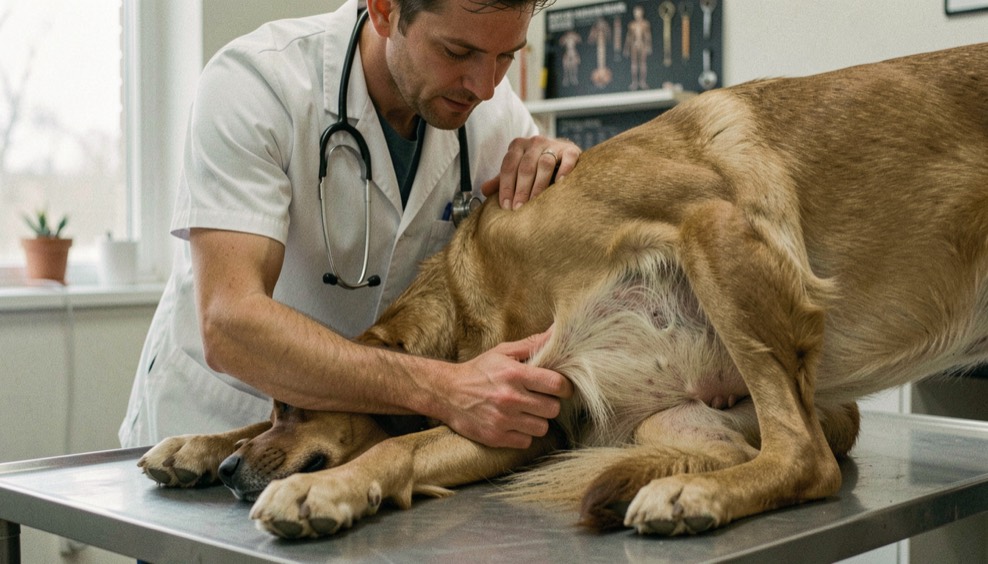
Turning Morphology Into a Screening Plan
Once you know the blueprint, the screening priorities write themselves. For each class of build there is a matching set of checks:
| Build type | Primary joint risk | What to screen or watch |
|---|---|---|
| Giant, fast-growing | Hips, elbows, OCD, spine | Growth diet, PennHIP/OFA on parents, watch for panosteitis lameness in year one |
| Deep-chested athlete | Elbows, shoulders, cruciate | Forelimb lameness after exercise, elbow scores, cruciate mechanism at annual exam |
| Chondrodysplastic | Intervertebral discs, shoulders | Ramp discipline, weight, reluctance to jump, hind-end strength |
| Toy and small | Patellas, hips (Legg-Perthes) | Skipping gait, knee palpation at every vet visit, lean body condition |
| Sloped topline herding | Hips, lumbar strain | OFA/PennHIP, sitting posture, bunny-hop gait, lower-back tension |
For the screening side, the OFA's CHIC breed listings are the reference I use — they show, breed by breed, which health tests the parent club actually requires. It is the shortest honest answer to "what should this dog have been tested for?"
What Morphology Does Not Tell You
Morphology is a probability statement, not a diagnosis. Lines within a breed vary more than breeds sometimes do — a working-line Shepherd and a show-line Shepherd are effectively different morphologies sharing a name. Individual dogs outlier their blueprint constantly: I have seen nine-year-old giant breeds with clean hips and four-year-old small breeds with grade-three patellas.
Use the silhouette to set the surveillance plan, then let the actual dog — its gait, its early-warning signs, its imaging if indicated — override the map. And when you adjust the plan, adjust it through the usual levers: body condition, exercise dosing, and the supplement stack matched to the risk.
The Bottom Line
Learn to read morphology and breed pages stop being trivia. Leg-to-spine ratio, angulation, chest depth and temperament are the four numbers behind every joint plan worth writing — whether the dog in front of you is a wolfdog built to trot fifty kilometers or a Maltese built to be carried. Pick the build, map the risk, then feed, dose and watch accordingly. The age-based protocol guide shows how the plan shifts as the dog moves through life stages.