
"Natural" is the most exploited word in the pet health industry. Every snake oil vendor puts it on the label. So when dog owners ask me about natural remedies for arthritis, I split the answer into two distinct categories: things with real physiological mechanisms and evidence, and things that feel good to give but don't do much.
I'm a nutritionist, not a pharmaceutical skeptic. Some pharmaceutical interventions — NSAIDs, injectable joint therapies, laser therapy — are genuinely excellent for arthritic dogs. But the question being asked is specifically about the natural side, so let me give you an honest assessment.
Natural Approaches with Solid Evidence
Omega-3 Fatty Acids (EPA and DHA)
If I had to recommend one natural intervention for a dog with arthritis, it would be marine-sourced omega-3 fatty acids at therapeutic doses. EPA specifically competes with arachidonic acid in the prostaglandin synthesis pathway, reducing the production of pro-inflammatory eicosanoids. This isn't herbal theory — it's well-established biochemistry with multiple controlled canine studies behind it.
The critical detail: the dose has to be therapeutic. The 50mg of omega-3s in a typical commercial dog food does nothing meaningful. For anti-inflammatory benefit, dogs need approximately 75 to 100mg of combined EPA and DHA per kilogram of body weight daily. For a 30kg dog, that's 2,250 to 3,000mg of EPA + DHA — not fish oil total weight, but the active EPA/DHA content specifically. My omega-3 guide covers how to calculate doses and evaluate products.
Green-Lipped Mussel (Perna canaliculus)
New Zealand green-lipped mussel is one of the more interesting natural options because it works through multiple mechanisms simultaneously. It contains a unique omega-3 called eicosatetraenoic acid (ETA) that has demonstrated anti-inflammatory effects, along with glycosaminoglycans that provide cartilage matrix substrates. A 2013 study in BMC Veterinary Research showed measurable improvements in veterinary-assessed mobility scores in arthritic dogs receiving GLM powder.
The caveat is processing sensitivity. The bioactive compounds in GLM are destroyed by heat. Products labeled "freeze-dried" or "cold-processed" retain efficacy; standard dried or cooked preparations may be largely inert by the time they reach your dog's bowl. Read processing information before buying.
Boswellia serrata
Boswellia extract contains boswellic acids that inhibit 5-lipoxygenase, an enzyme involved in leukotriene synthesis. Leukotrienes contribute to joint inflammation through a different pathway from prostaglandins, so Boswellia and omega-3s are potentially complementary. A 2004 study in The Veterinary Record showed Boswellia serrata extract at 40mg/kg daily improved gait and reduced pain scores in dogs with osteoarthritis.
I include a modest Boswellia dose in my senior dogs' protocols. It's not a first-line intervention, but as a component of a broader supplement stack, it has plausible mechanisms and reasonable evidence. GI sensitivity can occur at higher doses.
Dietary Anti-Inflammatory Foundation
A whole-food diet rich in anti-inflammatory ingredients creates a systemic environment that either supports or undermines every supplement you give. Dogs eating high-refined-carbohydrate diets maintain elevated inflammatory tone that counteracts the supplements you're paying for. The anti-inflammatory diet guide details practical dietary changes that meaningfully reduce systemic inflammation.
Natural Approaches with Limited Evidence
Turmeric and Curcumin
I get asked about turmeric constantly, and my answer is always the same: the theory is sound but the delivery is terrible. Curcumin has demonstrable anti-inflammatory effects — in laboratory settings. The problem is bioavailability. Dogs (and humans) absorb very little curcumin from standard turmeric powder. The molecule is rapidly metabolized and poorly transported.
Some newer formulations using phospholipid complexes or nanoparticle delivery improve absorption, but these are no longer "just turmeric." They're pharmaceutical-grade curcumin preparations that cost significantly more. If you're investing in a curcumin product, verify it specifies bioavailability enhancement and the specific curcuminoid content in milligrams, not just "turmeric extract."
Ginger
Gingerols and shogaols have anti-inflammatory properties in cell culture studies. Canine-specific research is essentially nonexistent. Ginger is safe for dogs in culinary amounts, but there's no established therapeutic protocol or dose. I wouldn't expect meaningful joint benefit from amounts a dog would realistically consume.
Collagen Broths and Bone Broth
Bone broth has become a pet wellness trend with claims that the collagen it contains supports joint health. The biological reality is more complicated. Dietary collagen is broken down into amino acids during digestion — it doesn't arrive at joints intact. The collagen your dog's body deposits in cartilage is synthesized fresh from those amino acids, not derived directly from the broth.
That said, bone broth provides glycine and proline — amino acids used in collagen synthesis — along with minerals. It's a genuinely nutritious addition to a dog's diet, just not for the reasons usually marketed. The dietary anti-inflammatory guide covers how to incorporate it appropriately.
Physical Natural Therapies
Hydrotherapy
Hydrotherapy — underwater treadmill work or swimming — is one of the most evidence-supported natural interventions for arthritic dogs. Water buoyancy reduces joint loading by up to 90% in shallow treadmill work, allowing full range-of-motion movement and muscle conditioning without the compressive forces that aggravate pain. I have yet to see a well-designed study that fails to show benefit.
The limitation is access and cost. Certified canine hydrotherapy facilities are not universal, and session costs add up. For owners without access, guided swimming in clean water provides partial benefits. The physical therapy and hydrotherapy guide covers finding certified practitioners and at-home alternatives.
Massage and Passive Range of Motion
Gentle massage of muscles surrounding arthritic joints reduces secondary muscle tension that develops when a dog guards a painful limb. It doesn't treat the joint directly but addresses one consequence of chronic pain. Passive range-of-motion exercises — gently moving the joint through its range while the dog is relaxed — help maintain mobility and prevent contracture of the joint capsule.
These can be learned from a veterinary physiotherapist and applied at home. They're low-cost, low-risk, and reliably appreciated by most arthritic dogs.
Environmental Modifications
Reducing the physical demands placed on arthritic joints is itself a natural therapy. Orthopedic beds that distribute weight evenly reduce pressure point discomfort during rest. Ramps and steps eliminate the repetitive impact of jumping. Non-slip flooring prevents the muscle strain of slipping on hard surfaces. These environmental changes cost little and consistently improve quality of life. The joint-friendly home environment guide covers specific modifications for different joint conditions.
What I Don't Recommend
Essential oils for topical application: No evidence of joint benefit and significant toxicity risk with many commonly used oils, particularly tea tree, eucalyptus, and clove. Never apply essential oils to or near your dog's joints.
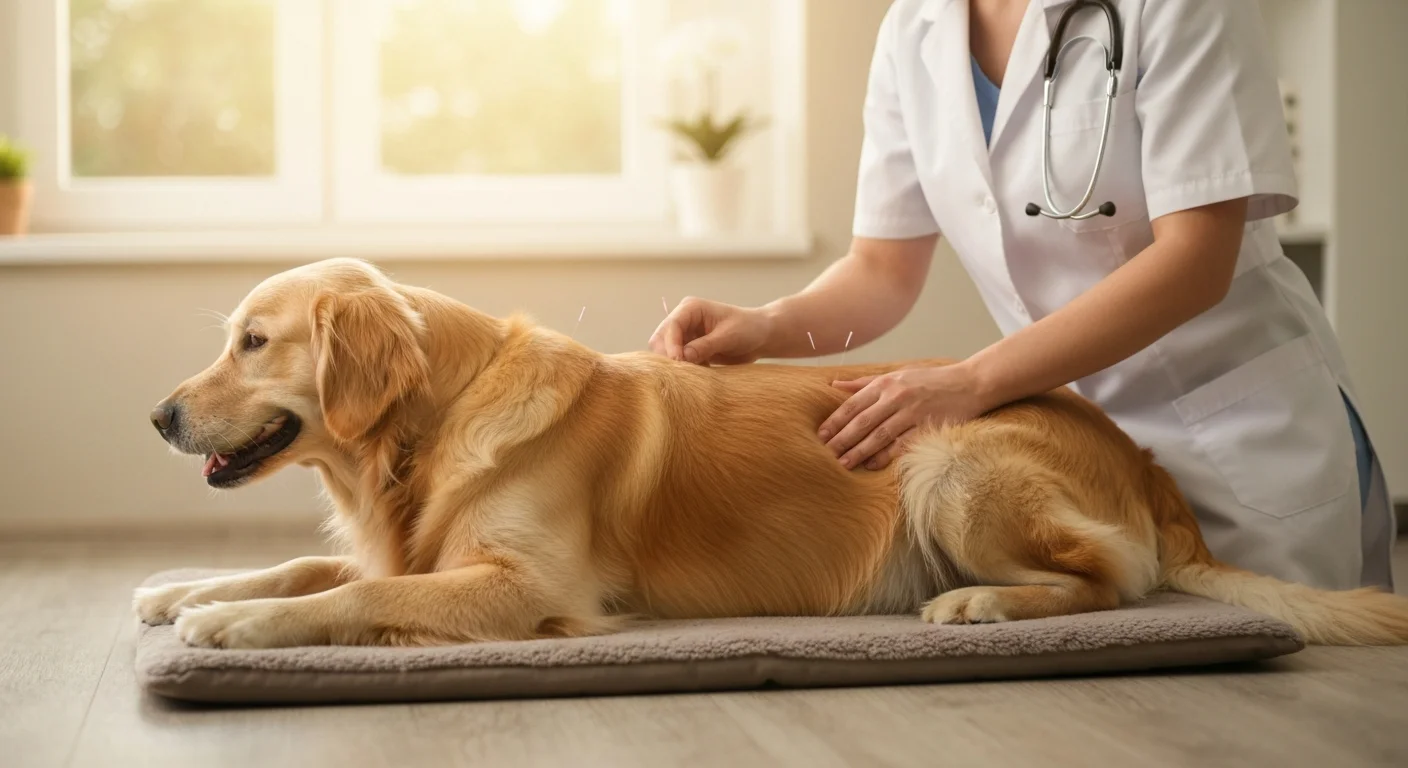
Acupuncture: I know this will frustrate some readers. The evidence for veterinary acupuncture in joint pain is inconsistent and methodologically weak. I'm not opposed to it, but I can't recommend it as something that has clear demonstrated benefit. If cost is a factor, spend the money on omega-3s first.
Magnetic therapy products: Magnetic collars, beds, and wraps have no plausible mechanism for affecting joint pathology at the field strengths consumer products generate. Save your money.