
Raw feeding is one of the most polarizing topics in canine nutrition, with advocates claiming near-miraculous health improvements and critics citing contamination risks and nutritional inadequacy. I've formulated raw diets professionally for 12 years and I feed my own working dogs a modified raw diet. My position is neither ideological raw advocacy nor reflexive dismissal — it's trying to follow the evidence, which is genuinely mixed and context-dependent.
On joint health specifically, there are real ways a well-formulated raw diet can support joint health outcomes, and real risks in poorly formulated raw diets that can make joint problems worse. This guide covers both sides with the specificity that's actually useful.
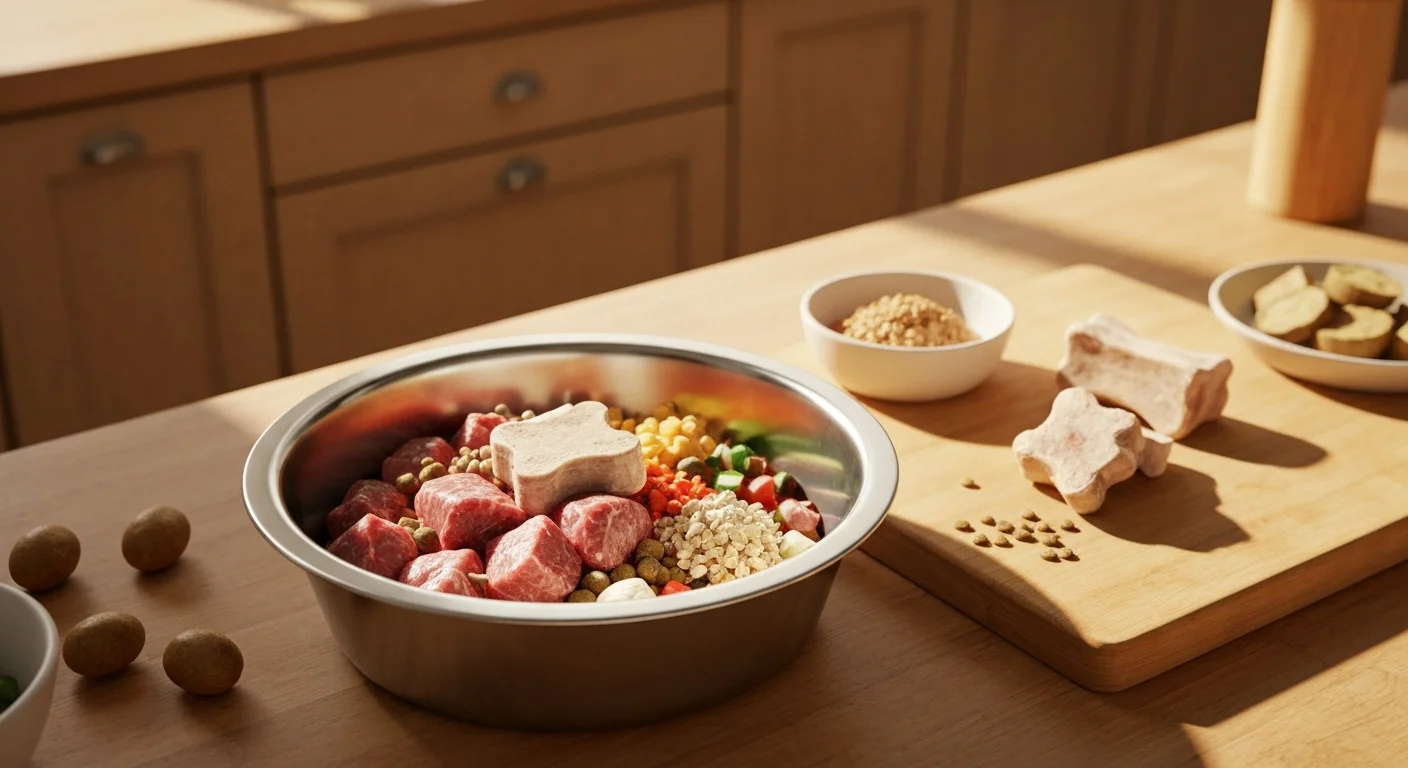
The Anti-Inflammatory Case for Raw Feeding
Omega-6 to Omega-3 Ratios
The most legitimate joint health argument for raw feeding relates to fatty acid ratios. Most conventional kibble-based diets use chicken, pork, and corn as primary ingredients — all of which are high in omega-6 fatty acids. The resulting omega-6 to omega-3 ratio in many commercial kibble diets runs from 10:1 to 25:1 or higher. A ratio above approximately 5:1 to 10:1 has been associated with elevated systemic inflammatory tone.
A well-formulated raw diet using fatty fish as a regular protein component and avoiding excessive chicken fat can achieve significantly better omega-6 to omega-3 ratios — closer to the 5:1 range. This dietary inflammatory baseline matters for joint health because systemic inflammation amplifies joint inflammation. Even if specific joint pathology isn't affected, reducing baseline inflammatory tone means less inflammatory input into already-compromised joints.
That said, even the best raw diet typically doesn't provide enough omega-3s to reach therapeutic anti-inflammatory doses. Supplemental omega-3s are still needed for dogs with established joint disease. The omega-3 dosing guide covers how to account for dietary omega-3 sources when calculating supplemental needs.
Reduced Refined Carbohydrates
Most raw diets are low in refined carbohydrates relative to kibble, which typically contains 30 to 60% carbohydrate by dry weight. While the direct relationship between dietary carbohydrates and canine joint inflammation isn't as well established as in humans, high-glycemic carbohydrate loads do promote elevated insulin and inflammatory cytokine production in dogs, particularly in overweight individuals. A lower-carbohydrate dietary pattern may reduce this contribution to systemic inflammation.
Higher Digestibility and Bioavailability
Raw animal proteins generally show higher digestibility coefficients than cooked or processed proteins in the limited studies comparing them directly. Higher digestibility means more amino acids available for the body to use — including glycine and proline, which are needed for connective tissue synthesis including cartilage. This is a modest effect, but meaningful over a lifetime.
The Risks in Raw Feeding for Joint Health
Calcium Imbalance: The Most Common Error
The biggest risk in raw feeding from a joint health perspective isn't contamination — it's nutritional imbalance, specifically calcium and phosphorus. I see this mistake constantly: owners feeding raw muscle meat without bone, which is dramatically calcium-deficient. Or feeding raw with bone but adding dairy or calcium supplements on top, creating excess.
The calcium-to-phosphorus ratio in muscle meat alone is approximately 1:20 — profoundly deficient. A dog fed primarily muscle meat without balanced bone content will mobilize calcium from its own skeleton to maintain blood calcium levels, leading to progressive bone demineralization. Over months to years, this weakens the structural bone that supports joints. In young dogs, it can create growth disturbances that contribute to joint problems directly.
A properly formulated BARF (Biologically Appropriate Raw Food) diet uses approximately 10 to 15% edible bone content to achieve appropriate calcium ratios. A raw meaty bone model relies on whole prey including bone. Either approach, properly implemented, avoids this problem. An unbalanced "meat only" raw diet creates it.
Vitamin D and Mineral Imbalances
Raw diets, particularly those without organ meats in appropriate proportions, can be deficient in vitamin D, zinc, copper, and manganese — all of which have roles in bone and connective tissue health. Vitamin D deficiency in dogs leads to rickets in growing animals and impaired bone mineralization in adults.
These deficiencies are avoidable with proper formulation but common in owner-developed raw diets based on online recipes or arbitrary ingredient lists. If you're feeding a home-prepared raw diet, I strongly recommend having it analyzed using software like NutriGen or BARF World formulation tools, and periodically running a nutritional panel on your dog.
Practical Raw Diet Formulation for Joint Health
Protein Source Selection
For joint health specifically, the best protein sources in a raw diet include:
- Fatty fish (sardines, mackerel, herring): Highest omega-3 contribution of any raw protein source. Feed 2 to 3 times weekly if possible.
- Beef and lamb: Better omega-6 to omega-3 ratio than chicken; grass-fed beef significantly better than grain-fed
- Venison and rabbit: Lean proteins with favorable fatty acid profiles
Chicken can be part of a raw diet but should not dominate. High-chicken raw diets have similar omega-6 loading issues as chicken-heavy kibble.
Organ Meat Inclusion
Organ meats — liver, kidney, spleen — provide the fat-soluble vitamins and trace minerals that muscle meat lacks. The general guideline is 10% organ meat, with liver comprising no more than 5% of the total diet to avoid hypervitaminosis A. Tripe (green/raw ruminant stomach) provides digestive enzymes and has excellent overall nutritional balance.
Beneficial Additions
Certain additions to a raw diet specifically support joint health beyond the baseline diet:
- Raw bone broth: Glycine, proline, and hydroxyproline — connective tissue amino acids. Not a substitute for joint supplements but a useful addition. The anti-inflammatory diet guide includes bone broth preparation guidance.
- Green-lipped mussel powder (cold-processed): Excellent omega-3 profile plus glycosaminoglycans. Add to any diet, raw or commercial.
- Leafy greens: Antioxidants and vitamin K for bone health
Commercial Raw vs. Home-Prepared
Commercially prepared frozen raw diets from reputable manufacturers (Primal, Darwin's, Steve's Real Food, Open Farm) offer a middle ground: better nutritional completeness than most home-prepared diets, higher-quality ingredients than most kibble, and practical convenience. They're formulated to meet AAFCO nutrient profiles and have undergone some form of nutritional analysis.
The trade-off is cost and limited ingredient control. If specific joint-supportive ingredients (fatty fish, specific organ meats) are your priority, home preparation allows optimization that commercial products can't always match.

The Realistic Bottom Line
A well-formulated raw diet with appropriate fatty acid balance, correct calcium ratios, and targeted joint-supportive ingredients is probably the optimal dietary foundation for joint health in dogs. The evidence for "raw is better" isn't strong enough to make it a universal recommendation, but the mechanistic arguments are sound.
A poorly formulated raw diet — particularly one low in calcium, deficient in omega-3s, or inadequate in micronutrients — is worse for joint health than a well-formulated commercial diet. The premise that raw is inherently superior regardless of formulation is not supported by evidence.
Regardless of dietary approach, the supplement dosing guide and age-based protocol apply equally — appropriate supplementation complements a good diet rather than replacing it.