
The joint problems seen most often in the American Cocker Spaniel are hip dysplasia, patellar luxation, and the everyday wear that follows a long back, a deep chest, and a busy, merry temperament. The breed's compact sporting build concentrates load on the hip and stifle joints, so weight, surface, and daily movement matter more than any single supplement. A steady routine built around lean body condition, controlled exercise, and early screening is what keeps most cockers comfortable into their senior years.
Which joint problems are common in the American Cocker Spaniel?
Hip dysplasia is the orthopedic condition most frequently discussed in the breed. The hip is a ball and socket joint, and when the socket is shallow or the ball sits loosely, the joint rubs instead of gliding. Over months and years that friction produces arthritis. Because the American Cocker Spaniel is a moderate, compact dog rather than a giant breed, dysplasia is often missed early: the dog still runs, still greets you at the door, and the limp only shows after a long walk or a hard play session.
Patellar luxation is the second common concern. The patella, or kneecap, normally tracks in a groove at the front of the femur. In some cockers it slips sideways, usually inward, and the dog skips for a few steps before the knee pops back into place. Mild cases cause an occasional hop. More advanced cases cause persistent lameness and, over time, wear on the cartilage behind the kneecap.
A third category is not a diagnosis but a pattern: elbow incongruity, cruciate ligament injury, and general osteoarthritis all appear in the breed at rates high enough that owners should know the signs. The American Cocker Spaniel joints are also affected by the breed's coat and ear care demands, because a dog that spends twenty minutes being groomed and five minutes being walked is not getting the movement its joints need. For a fuller picture of the breed's standard, temperament, and care expectations, the American Cocker Spaniel joints profile at American Cocker Knowledge is a useful English reference to read alongside your vet's advice.
How does the breed's compact build affect its joints?
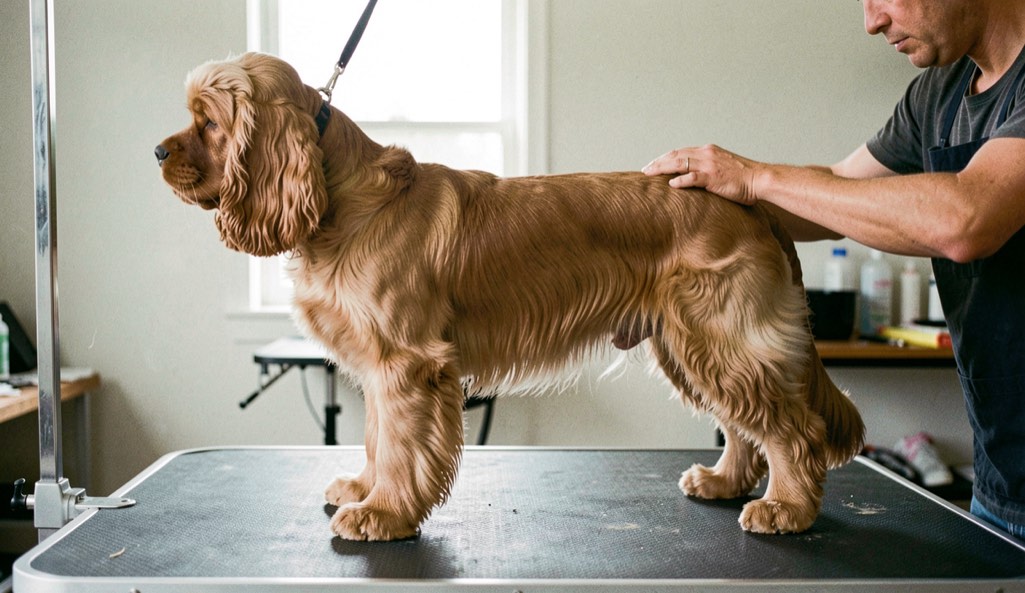
The American Cocker Spaniel standard describes a compact, well-balanced sporting dog: a short back, a deep chest, sturdy bone, and a level topline. That structure is efficient for flushing game in thick cover, and it is also a set of mechanical trade-offs.
A short back means less spinal flexibility and a shorter lever arm for the hindlimbs. The dog turns quickly and stops hard, which is exactly what a flushing spaniel does, but those sudden decelerations load the stifle and the hip. A deep chest shifts the center of gravity forward, so the front limbs carry more of the braking force. Sturdy bone is protective, but it also means the dog is heavier than its height alone would suggest, and every extra pound is felt at the joint surface.
The breed's temperament, often described as merry and eager to please, adds a behavioral layer. A cocker that loves retrieving will keep running on a sore hip long after a more cautious dog would stop. Owners often read that enthusiasm as proof the joints are fine. It is not. It means the dog will not self-limit, so the owner has to.
Coat and body condition interact here too. The breed's feathered coat hides weight well. A cocker can be five pounds overweight and still look fluffy rather than fat. Since body condition is the single largest modifiable factor in canine joint disease, that visual camouflage is a real problem. Hands-on rib checks, not photographs, are how you judge it.
What daily routine protects a cocker's joints?
The routine that helps most is unglamorous and repeatable. Start with body condition. You should be able to feel the ribs under a thin layer of fat and see a waist from above. For a typical American Cocker Spaniel, that usually means a body condition score of four or five out of nine. If your dog is above that, a weight loss plan is the highest-value joint intervention available, and it works better than any supplement.
Next, exercise in controlled doses. Two or three shorter walks beat one long weekend hike. Let the dog trot on grass or packed dirt when possible, and keep hard pavement sessions short. Swimming is excellent for cockers that tolerate water, because it loads the joints without impact. Avoid repetitive ball throwing on hard ground, and avoid sudden stops on slick floors at home. Rugs and runners on tile are a cheap, effective change.
Third, build strength rather than only endurance. Slow, deliberate walking up a gentle slope, or a few minutes of controlled sit-to-stand repetitions, recruits the muscles that stabilize the hip and knee. Stronger muscles absorb load that would otherwise reach cartilage. Keep sessions short, and stop if the dog shows stiffness the next day.
Fourth, manage the environment. Nails trimmed short improve grip and reduce toe strain. A firm, supportive bed matters more than a soft one for a dog with sore hips. Ramps or steps help cockers that ride in cars or sleep on furniture. Keep the dog warm and dry after cold, wet walks, since cold and damp often worsen stiffness in arthritic joints.
Fifth, screen early. Hip and patella evaluation through your veterinarian, and where appropriate through official breed screening schemes, gives you a baseline before symptoms appear. Early findings let you adjust weight, exercise, and home setup while the dog is still comfortable. They also inform breeding decisions, which is why responsible breeders test.
When should you call your vet?
Call when you see a change in gait that lasts more than a few days, a skip or hop that recurs, difficulty rising after rest, reluctance to jump into the car, or a new reluctance to be handled around the hips. Call sooner if the dog yelps, holds a limb up, or stops eating. Sudden non-weight-bearing lameness can indicate a cruciate tear or another acute injury, and those do better with prompt assessment than with watchful waiting.
Age matters less than trend. A two-year-old cocker with an intermittent skip and a ten-year-old cocker with morning stiffness both deserve an exam. The difference is that the younger dog gives you more room to prevent long-term damage.
What does the evidence say about supplements and comfort?
Joint supplements are widely sold and unevenly studied. The strongest evidence in canine joint care supports weight management and appropriate exercise, not any single nutraceutical. That does not mean supplements are useless, but it means they belong after the basics, not instead of them. If you want to try one, discuss it with your veterinarian, give it a fair trial of eight to twelve weeks, and judge by observable function: does the dog rise more easily, walk farther, limp less?
Prescription pain management has a clearer evidence base for dogs with established arthritis. Non-steroidal anti-inflammatory drugs, given under veterinary supervision with appropriate monitoring, reliably reduce pain and improve activity. Newer options exist for dogs that cannot tolerate them. The point is that discomfort does not have to be accepted as a normal part of aging.
Physical rehabilitation, including therapeutic exercise, massage, and modalities such as laser or underwater treadmill work, is increasingly available and often helpful. Ask your vet for a referral if your cocker has had surgery or has persistent lameness.
The long view
An American Cocker Spaniel with a compact sporting build, a merry attitude, and a thick coat is a dog that will often hide joint discomfort until it is well established. The owner's job is to compensate: keep the dog lean, move it in measured doses, build muscle, modify the home, and screen before symptoms force the issue. None of that is dramatic, and that is the point. Joint care in this breed is a daily habit, not a single decision, and the dogs that age well are usually the ones whose owners started early.
Background sources: American Kennel Club. Orthopedic Foundation for Animals.