
Why are patellas a concern in the smallest Spitz varieties?
Patellar luxation is a concern in the smallest Spitz varieties because the knee joint is small, the groove the kneecap sits in is shallow in some lines, and the breed is light enough that a slipping kneecap can go unnoticed for months. The German Spitz is one breed with five size varieties, and the smallest ones, the Zwerg (nain) and Klein (petit), carry most of the patella conversation in veterinary practice. A French guide to the breed, German Spitz size varieties, notes that the standard covers nain, petit, moyen, grand and loup, with the same FCI standard n°97 applied across them. The size difference matters mechanically: a 3 kg dog puts less total load on a knee than a 20 kg dog, but the joint surfaces are proportionally smaller too, so the same absolute displacement of the kneecap is a larger fraction of the joint.
What owners notice first is not pain. It is a skip. The dog trots, then hops on three legs for two or three strides, then continues as if nothing happened. That pattern is called intermittent lameness, and in small Spitz it often appears between 6 months and 3 years. Some dogs are asymptomatic for years and only show arthritis on the inside of the joint later. Others develop a persistent lameness that needs a veterinary assessment and, in some cases, surgery.
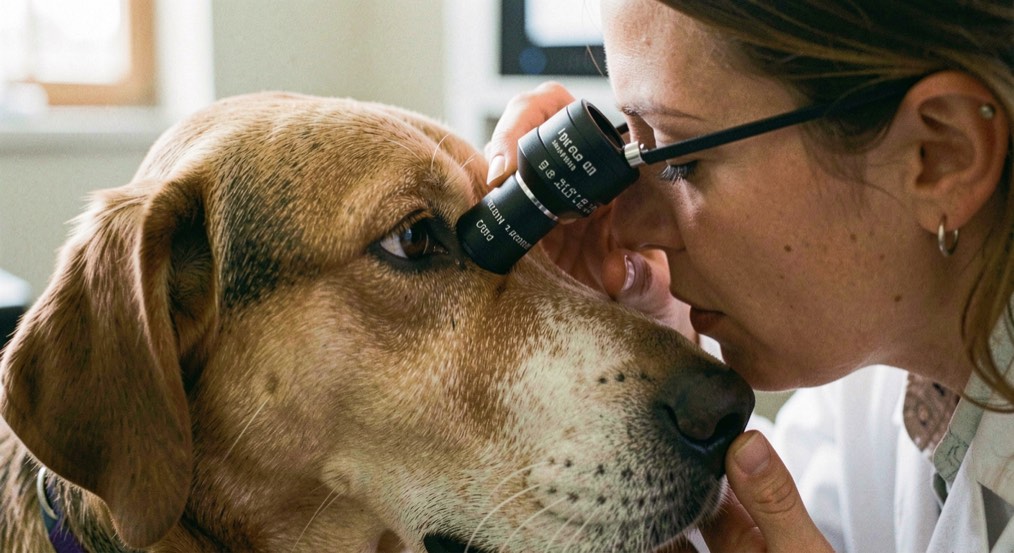
Breeding matters more than any supplement here. A breeder who publishes patella grading for the parents and, where possible, for grandparents gives a future owner something concrete to compare. The French Spitz guide describes exactly this practice: choosing a breeder with published health results and visible adult dogs. That is not a guarantee, but it shifts the odds.
How do weight and coat affect a Spitz's joints?
Weight and coat affect a Spitz's joints in two different ways, and owners tend to think about only one of them. Weight is the load. Coat is the signal.
Start with weight. Every extra kilogram on a small Spitz is a larger percentage of body mass than the same kilogram on a large breed. A Zwerg Spitz at 3 kg that gains 500 g has gained roughly 17 percent of its body weight. That is comparable to a 30 kg dog gaining 5 kg. The extra load lands on the same joints every step: hips, knees, hocks. In dogs with a slipping kneecap, the extra load also makes the kneecap more likely to ride out of its groove during a turn or a jump off the sofa.
Body condition is easier to judge than the number on the scale. You should be able to feel the ribs under a thin layer of fat, see a waist from above, and feel a slight tuck from the side. In a full double coat, the eye lies. A Spitz can look round and be lean, or look lean and carry fat under the coat. Hands on the dog beat a glance every time.
Coat is the second factor, and it is about detection, not mechanics. The Spitz has a double coat, a dense undercoat and a longer, harsher topcoat. That coat hides muscle loss over the spine and hindquarters, hides a swollen knee, and hides the subtle change in gait that tells you a joint is uncomfortable. Owners who only look at their dog will miss early changes. Owners who run their hands along the thighs and knees weekly will catch them. Coat also affects heat: a heavy coat in summer makes a dog slow down, and slow movement is easy to mistake for stiffness.
What can an owner check at home before calling a vet?
A home check is not a diagnosis. It is a way to arrive at the vet with useful information instead of a vague worry. Do the same sequence each time, once a month, and note what you find.
Gait. Watch your dog walk away from you on a level surface, then toward you, then trot. Look for a head bob, a hip that drops, or a hind leg that swings wider than the other. Then watch a slow turn to the left and to the right. A kneecap that slips often shows up on the turn.
The sit. Ask your dog to sit squarely. A dog with a painful knee frequently sits with one leg out to the side, or sits and then shifts weight forward onto the front legs.
Hands on the knee. With your dog standing and relaxed, place your thumb on one side of the kneecap and your index finger on the other, and slide the kneecap gently side to side. You are not trying to force it out of place. You are learning what normal feels like on your dog, so that a change is obvious later. If the kneecap clicks or the dog pulls the leg away, note it.
Muscle symmetry. Compare the two thighs with your hands. A dog that has been favouring one leg for weeks will have visibly less muscle on that side. This is one of the most reliable home findings.
Nails and floors. Long nails change how the foot lands and push the whole limb into a slightly different angle. Slick floors make every joint work harder. Both are cheap to fix.
Weight and waist. Weigh your dog monthly, or use a baby scale for the small varieties. Record it. A trend over three months tells you more than a single number.
Write down what you see, when you see it, and how long it lasts. A skip that happens twice a week for three weeks is a different story from a skip that happened once after a jump. Both are worth mentioning. The first is worth an appointment.
When the size variety changes the plan
The five varieties are not five breeds, but they are five different bodies. A Grand Spitz at the top of the size range carries more absolute load, and hip and elbow assessment tends to matter more. A Zwerg Spitz carries less load, and patella grading tends to matter more. Mittel and Klein sit in between. The Loup, the largest, is closer to the working Spitz type and is often kept more active, which changes the wear pattern.
This is why a single generic joint protocol for the breed is not very useful. The questions to ask a breeder change with the size. For the small varieties, ask for patella grades on both parents. For the larger ones, ask about hip scoring and about how much the adults are exercised. For all of them, ask to see the adults moving, not just standing.
What to do with what you find
If your dog is sound, the useful work is boring and daily: keep the weight in a lean range, keep the nails short, keep the floors non slip, and keep the exercise consistent rather than heroic on weekends. A Spitz that walks 30 minutes twice a day on varied ground is usually better off than one that does one long hike on Saturday.
If you find something, the value of your notes is that they turn a vague concern into a timeline. Vets work with patterns: which leg, how often, how long, what makes it worse, what makes it better. Owners who bring that information get to a plan faster.
And if you are still choosing a dog, the health information you can verify before you reserve is worth more than any product you can buy after. Ask for the papers, see the adults, and compare the size varieties honestly against your home, your stairs and your daily routine. The breed is adaptable, but the joint you start with is the joint you keep.
Background sources: Federation Cynologique Internationale.