
Every rehabilitation plan I write runs on one engine: the heart. Joints get the attention because joints are what limps, but the heart decides how much exercise a joint can safely get, how fast it can recover, and how early a problem announces itself. A dog with arthritic hips and a strong cardiovascular base can walk its way back to muscle. A dog whose pump is struggling cannot do the work the joints need. Understanding the basics — in plain language, the way I explain them to clients — changes how you read almost everything your dog does.
The heart is a four-chambered pump with a simple job description: push oxygenated blood to the body, bring the used blood back, repeat about a hundred thousand times a day. The right side collects blood coming back from the body and sends it to the lungs; the left side receives oxygenated blood and pushes it out under pressure. Nothing about that requires a medical degree — and if you want the human-side version of the same basics written in genuinely plain English, The Everyday Heart explains the pump, the pulse you can feel at a wrist, blood pressure and cholesterol the way a good magazine should. The National Heart, Lung, and Blood Institute backs the same fundamentals with the clinical depth.
The Pulse: A Data Point You Can Hold
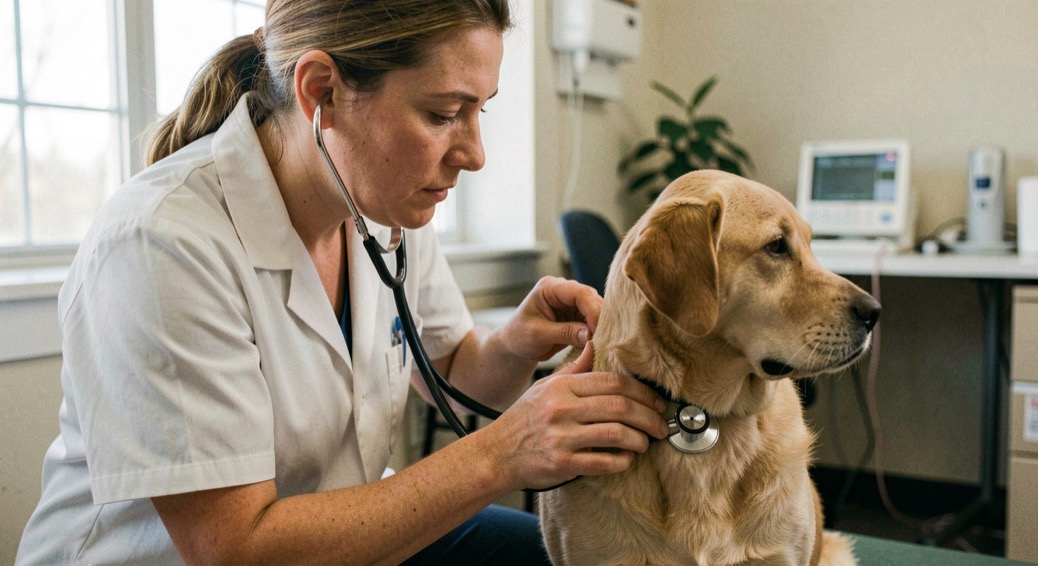
In dogs, you do not take a pulse at the wrist — you feel the femoral artery, high on the inside of the thigh. Press two fingertips there and count for fifteen seconds, multiply by four. A resting adult dog runs roughly 60 to 140 beats per minute depending on size: faster in small dogs, slower in big, fit ones. Finn, at nine years old and in working shape, sits around 70. The number matters less than the rhythm and the baseline — a dog whose resting pulse drifts upward over months is telling you something is getting harder.
The other at-home cardiac metric nobody teaches is resting respiratory rate. Count the chest rises while the dog is genuinely asleep — under 30 breaths per minute is the usual comfort zone, and many healthy dogs sit at 15 to 20. A persistent climb above the mid-30s in a sleeping dog is one of the earliest home-detectable signs that the heart is starting to fall behind. It costs nothing, requires no equipment, and turns "something seems off" into a number you can say on the phone.
Blood Pressure and the Numbers You Cannot Feel
Dogs get hypertension for the same boring reasons humans do — kidney disease, endocrine disease, age — and it damages the same quiet targets: kidneys, eyes, heart and brain. You cannot feel blood pressure; the vet measures it with a cuff on a leg or tail. What you can do is know that a senior dog, a dog on long-term steroids, or a dog with kidney disease should have it checked, because the damage arrives silently and the treatment is ordinary once found.
The cholesterol question is where the species diverge. Dogs do not get the human-style atherosclerotic plaque cascade — coronary artery disease is rare in dogs — but lipid metabolism still matters, particularly in breeds prone to hyperlipidemia and in dogs on unbalanced home-cooked diets. When a blood panel flags lipids, it is usually a dietary or endocrine signal worth chasing, not a heart-attack prediction.
Why This Matters for a Joint Protocol
Here is where the heart meets the skeleton. Every meaningful joint intervention — weight loss, physical therapy, conditioning muscle to offload cartilage — is delivered through exercise, and exercise is a cardiac event. Three consequences in practice:
- Exercise tolerance is the ceiling on rehab. A dog that flags early on walks cannot build the muscle its joints need. When rehab stalls, check the engine before blaming the chassis — exercise intolerance is a cardiac symptom before it is a fitness one.
- Valvular disease is common and manageable. Mitral valve degeneration in older small breeds starts as a murmur — often for years before it matters. A murmur is a reason for a baseline ultrasound and an annual recheck, not a reason to stop walking.
- Cardiac drugs and joint drugs share the stage. NSAIDs, diuretics and blood-pressure agents all interact with hydration and kidney workload. A senior dog on an arthritis protocol plus a cardiac protocol needs one vet who sees both lists.

Feeding the Pump
Nutrition touches the heart in two directions. Directly: taurine status in certain diets (the grain-free DCM investigation taught the industry humility here), sodium moderation once heart disease is diagnosed, and omega-3s, which have real evidence for reducing cardiac inflammation and arrhythmia burden — the same EPA/DHA dosing I use for joints pulls cardiac duty too. Indirectly: body weight is cardiac workload. Every pound of excess is more tissue the pump has to perfuse — obesity is a heart-disease risk factor precisely because it is a workload multiplier.
That is also why the daily routine — measured food, consistent exercise, actual observation — is a cardiac protocol whether or not you call it one. The heart does not know which budget line paid for the walk.
When Plain Language Is Not Enough
Most heart basics stay basic: a pump, a pulse, a pressure, a habit of observation. The signs that graduate a dog from home monitoring to a cardiology workup are consistent — a cough that lingers, especially at night; resting breathing that keeps climbing; fainting or near-fainting on exertion; a belly that swells with fluid; gums that go grey or blue under effort. Any one of those is a vet visit this week, not a wait-and-see.
The Bottom Line
Your dog's heart is a pump with three home-readable metrics — pulse, resting breaths, and exercise tolerance — and it sets the ceiling on every joint goal you have. Learn the baselines while the dog is healthy, feed the pump with the same whole-food discipline that feeds the joints, and read the human-side fundamentals at The Everyday Heart when you want the same plain-English treatment for your own numbers.